
Top-Ranked Los Angeles CPS Lawyer Defending Parents in Juvenile Dependency Court


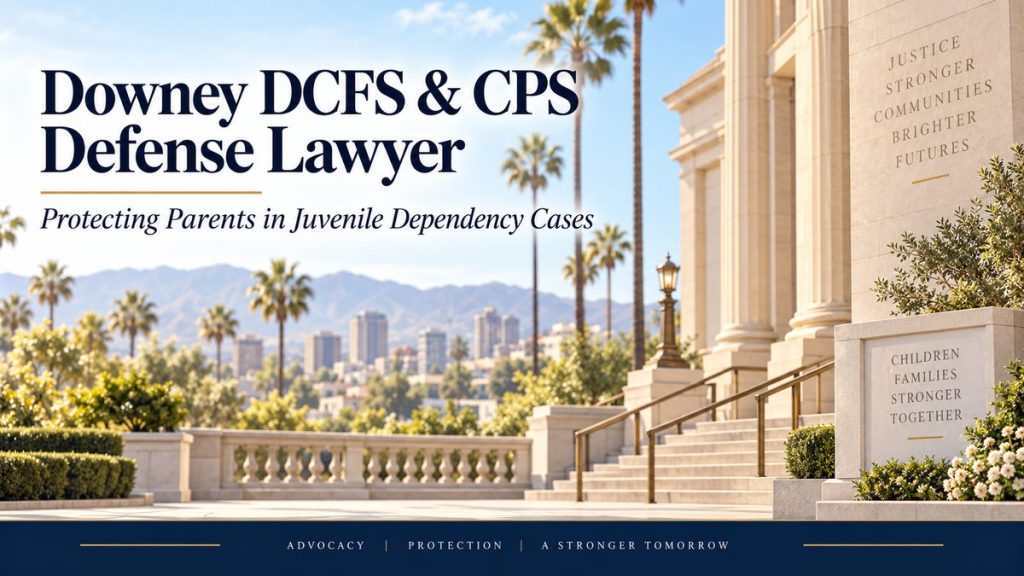
Downey DCFS & CPS Defense Lawyer: Protecting Parents in Juvenile Dependency Cases
When the Los Angeles County Department of Children and Family Services contacts your family, what happens next can move quickly.
A social worker may want to interview you or your child. DCFS may request access to your home. You may be asked to agree to a safety plan. In more serious situations, a child may be removed from the home and a juvenile dependency case may begin.
You do not have to navigate that process without legal guidance.
ALL Trial Lawyers represents parents facing DCFS investigations, CPS allegations, child removal, and juvenile dependency proceedings in Downey and throughout Los Angeles County.
If DCFS has contacted you, a petition has been filed, or your child has been removed from your care, contact our office to speak with a Downey juvenile dependency attorney about your situation.
Speak with a Downey CPS and DCFS defense lawyer today.
CALL NOW – (866) 811-4255
Has DCFS Contacted Your Family in Downey?
A phone call, home visit, or interview request from DCFS can be the beginning of a serious investigation.
Parents frequently contact us after:
• A DCFS social worker calls unexpectedly
• A social worker arrives at the family home
• DCFS asks to interview a child
• A school, medical provider, neighbor, family member, or other person makes a report
• A parent is accused of physical abuse, neglect, domestic violence, substance abuse, or inadequate supervision
• DCFS asks the family to agree to a safety plan
• A child is temporarily placed with a relative
• A parent learns that DCFS may seek court involvement
• A child has already been removed
• A WIC 300 Petition
The earlier you understand what DCFS is investigating and what legal consequences may follow, the better prepared you can be to make informed decisions.
A DCFS investigation does not automatically mean that a juvenile dependency case will be filed. But statements, interviews, documents, home visits, and decisions made during the investigation can become important if the matter later reaches court.
Our attorneys can help parents understand the allegations, communicate strategically with DCFS, prepare for interviews and meetings, and respond to the issues being raised.
What Does a Downey DCFS Lawyer Do?
A DCFS lawyer represents the parent, not the social worker and not the agency.
Our role is to protect your legal interests while helping you understand what is happening at each stage of the case.
Depending on the circumstances, representation may include:
• Reviewing the allegations against you
• Helping you understand what DCFS is requesting
• Preparing you for communications with social workers
• Advising you before an interview or home visit
• Reviewing proposed safety plans and voluntary agreements
• Gathering documents, witnesses, photographs, records, and other evidence
• Addressing inaccurate or incomplete allegations
• Preparing for possible juvenile court proceedings
• Representing you during dependency hearings
• Challenging allegations when appropriate
• Advocating concerning placement and visitation
• Addressing reunification services and case plans
• Protecting your position when there is a related criminal investigation or criminal case
Every family is different. The strategy should be based on the actual allegations, evidence, family circumstances, and procedural posture of the case.
DCFS Investigations in Downey
DCFS investigates reports of suspected child abuse or neglect in Los Angeles County.
An investigation may involve interviews with parents, children, siblings, and other people who may have relevant information. Social workers may also conduct home visits and review the family’s prior history with the agency.
The purpose of the investigation is to determine whether there are child safety concerns and what action, if any, should follow.
Possible outcomes can include closure of the investigation, voluntary services, continued agency involvement, temporary placement arrangements, or the filing of a juvenile dependency petition.
Because the investigation can influence what happens later, parents should take it seriously even when no court case has been filed yet.
Should I Talk to DCFS Without a Lawyer?
There is no single answer that applies to every family.
Parents often want to cooperate because they want the investigation resolved quickly. At the same time, it is important to understand what is being alleged, why certain questions are being asked, and how the information provided may affect the investigation or a later court proceeding.
A lawyer can help you understand your situation before you make important decisions about interviews, documents, safety plans, and other requests.
If there is also a criminal investigation, the situation can become even more complicated because statements made in one proceeding may have consequences elsewhere.
Our attorneys evaluate both the dependency issues and any overlapping criminal exposure when those issues arise.
Emergency Child Removal and Detention Hearings
Few events are more frightening for a parent than being told that a child is being removed from the home.
When DCFS believes that a child faces an immediate safety concern, the agency may pursue emergency removal procedures. A juvenile dependency petition may then be presented to the court.
The early hearings in a dependency case can be extremely important.
Issues may include:
• Whether the child can safely remain with or return to a parent
• Whether temporary placement outside the home is necessary
• Whether the child can be placed with a relative
• What visitation should occur
• Whether visits should be monitored
• What services should begin
• What restrictions should apply while the case is pending
Parents should be prepared to address the allegations and the child’s immediate circumstances rather than waiting until later in the case to begin building their position.
If your child has been removed or you have been told that DCFS intends to seek removal, contact a Downey child removal lawyer as soon as possible.
Juvenile Dependency Petitions Under Welfare and Institutions Code Section 300
California juvenile dependency proceedings commonly begin with allegations that a child falls within one or more provisions of Welfare and Institutions Code section 300.
The allegations can involve many different circumstances, including claims concerning abuse, neglect, failure to protect, substance abuse, domestic violence, inadequate supervision, or other asserted risks to a child’s safety.
A petition contains allegations. Allegations are not automatically findings.
The juvenile court process provides an opportunity for the allegations and evidence to be addressed through the dependency proceedings.
A parent facing a section 300 petition should understand exactly what conduct is being alleged and what evidence DCFS relies upon.
Our attorneys can review the petition, reports, records, witness information, and other evidence and develop a strategy based on the specific allegations in the case.
What Happens in a Los Angeles County Dependency Case?
Juvenile dependency proceedings involve several stages, and each hearing serves a different purpose.
Initial Hearing
At the beginning of the court case, the court addresses immediate issues involving the child and the pending allegations.
For a parent whose child has been removed, the immediate question is often where the child will live and what contact the parent will have while the case proceeds.
Jurisdiction Hearing
If the allegations are contested, the court may conduct a jurisdiction hearing.
At this stage, the court determines whether the allegations necessary for dependency jurisdiction have been established.
This is a critical point in the case because the court’s findings can determine whether the dependency proceeding continues.
Disposition Hearing
If the court sustains allegations, the case proceeds to disposition.
The court may address issues involving custody, placement, visitation, services, and the plan for the family moving forward.
Review Hearings
Dependency cases can continue through periodic review hearings.
The court may consider the parent’s progress, participation in services, visitation, the child’s placement, ongoing safety concerns, and whether circumstances support returning the child home or otherwise changing existing orders.
Parents should approach every stage with an understanding of how the decisions they make today may affect later hearings.
Representation at Edmund D. Edelman Children’s Court
Downey is located in Los Angeles County, and juvenile dependency matters are handled within the Los Angeles County dependency court system.
The Edmund D. Edelman Children’s Court is a major Los Angeles County courthouse for juvenile dependency proceedings.
For parents, understanding the court process is just as important as understanding the DCFS investigation itself.
A dependency attorney can help you prepare for hearings, understand reports and allegations, identify factual disputes, gather relevant evidence, and advocate for your position before the court.
If you have received paperwork identifying a courthouse, department, hearing date, or case number, provide that information when contacting our office so that an attorney can better understand where your case stands.
Accused of Child Abuse or Neglect by DCFS?
Not every allegation made to DCFS is accurate.
Reports can arise from misunderstandings, family disputes, custody conflicts, incomplete information, assumptions by mandated reporters, or allegations that a parent strongly disputes.
Other cases involve real family problems but disagreement about their seriousness, cause, or the intervention necessary to protect the child.
Effective representation begins by separating the allegations from the evidence.
That may require examining:
• Medical records
• School records
• Photographs or videos
• Text messages and communications
• Witness statements
• Police reports
• Prior DCFS history
• Evidence concerning the child’s care and living environment
• Evidence of services or treatment already completed
• Information concerning relatives and other potential caregivers
The appropriate response depends on the facts. Our attorneys work to identify what is disputed, what can be documented, and what issues need to be addressed immediately.
DCFS Cases Involving Criminal Allegations
Some dependency cases involve allegations that may also create criminal exposure.
Examples can include allegations of physical abuse, sexual abuse, domestic violence, child endangerment, or other conduct that may be investigated by law enforcement.
When criminal and dependency matters overlap, decisions in one case can affect the other.
Statements to investigators, testimony, interviews, protective orders, police reports, and other evidence may become relevant across proceedings.
ALL Trial Lawyers handles criminal defense as well as juvenile dependency matters, allowing our attorneys to evaluate the broader legal picture when a DCFS case intersects with a criminal investigation or prosecution.
Protecting Parental Rights During Reunification
When a child is placed outside the home, the focus often turns toward reunification.
Parents may be ordered or asked to participate in services intended to address the concerns identified in the case.
Depending on the circumstances, these may involve counseling, parenting programs, substance abuse treatment, testing, domestic violence programs, or other services.
Participation alone is not the only issue.
Parents should also understand what the court expects, how progress is being documented, whether visitation is occurring consistently, and whether the conditions that led to court involvement have changed.
Our attorneys can advocate concerning services, visitation, placement, progress, and reunification throughout the case.
Relative Placement and Family Support
When a child cannot immediately remain with a parent, relatives may become important to the placement process.
Grandparents, adult siblings, aunts, uncles, and other relatives may be able to provide family support while the dependency matter proceeds.
Placement questions can become complicated, particularly when multiple relatives are involved or when DCFS raises concerns regarding a proposed caregiver.
Our attorneys can address placement issues as part of the broader dependency case and help parents understand how placement may affect visitation and reunification.
Why Hiring a Lawyer Early Can Matter
Parents sometimes wait until a court case has already developed before contacting an attorney.
But significant events may occur before the first contested hearing.
DCFS may interview family members. Documents may be collected. Safety arrangements may be proposed. Children may be temporarily placed elsewhere. Social workers may begin forming conclusions about what occurred and what they believe should happen next.
Early legal advice allows a parent to understand the process before making decisions that may be difficult to undo.
It also gives counsel time to identify evidence, understand the family circumstances, and prepare for possible court proceedings.
If DCFS has contacted your family in Downey, you do not need to wait until your situation becomes an emergency to speak with a lawyer.
Frequently Asked Questions About Downey DCFS and CPS Cases
What should I do if DCFS contacts me in Downey?
Take the contact seriously. Find out what DCFS is requesting and consider speaking with an attorney before making important decisions about interviews, written statements, safety plans, or other significant requests.
Is CPS the same thing as DCFS in Los Angeles County?
People commonly use the term CPS when referring generally to child protective services. In Los Angeles County, the agency responsible for child welfare investigations is the Los Angeles County Department of Children and Family Services, commonly called DCFS.
Can DCFS remove my child?
There are circumstances in which a child may be removed based on asserted safety concerns. Whether removal is legally justified and whether the child can safely remain with or return to a parent depends on the particular facts and court proceedings.
What happens if DCFS files a petition?
A juvenile dependency court proceeding begins. The court can address the allegations, the child’s placement, visitation, services, and other issues affecting the family.
Where will my Downey dependency case be heard?
Downey is within Los Angeles County. Juvenile dependency proceedings are handled through the Los Angeles County Superior Court system. Your hearing notice and court documents identify the courthouse and department assigned to your particular case.
Can a lawyer help before DCFS files a court case?
Yes. Attorneys can advise parents during the investigation stage, including regarding interviews, agency communications, allegations, evidence, safety plans, and the possibility of future court proceedings.
What if the DCFS allegations are false?
You should identify the specific allegations and preserve evidence that may contradict or contextualize them. Depending on the case, relevant evidence may include communications, photographs, medical or school records, witnesses, police records, and other documentation.
What if I also have a criminal case?
Speak with counsel who understands how the dependency and criminal matters may interact. Statements or evidence in one proceeding can potentially affect the other.
Downey Juvenile Dependency Lawyers for Parents Facing DCFS
A DCFS investigation can affect your relationship with your children, your home, and your family.
You deserve to understand what is being alleged and what options are available.
ALL Trial Lawyers represents parents in Downey and throughout Los Angeles County in matters involving:
• DCFS investigations
• CPS allegations
• Emergency child removal
• Juvenile dependency petitions
• Detention hearings
• Jurisdiction hearings
• Disposition hearings
• Reunification
• Visitation disputes
• Relative placement
• Allegations involving abuse or neglect
• Dependency matters involving related criminal allegations
If DCFS has contacted you, your child has been removed, or you have received juvenile dependency court paperwork, contact ALL Trial Lawyers to discuss your case.
Protect your parental rights. Speak with a Downey DCFS and CPS defense attorney today.
[CALL NOW]
[REQUEST A CONSULTATION]
Serving Downey and families throughout Los Angeles County, including Bell Gardens, South Gate, Norwalk, Pico Rivera, Commerce, and surrounding communities.
This page provides general information and is not legal advice. Every dependency matter depends on its particular facts and circumstances. Past results do not guarantee a similar outcome.