
Top-Ranked Los Angeles CPS Lawyer Defending Parents in Juvenile Dependency Court


Malibu DCFS Lawyer: Private Juvenile Dependency Defense From Point Dume to Carbon Beach
Malibu is twenty-one miles of coastline with no hospital, no city police department, and one DCFS office an hour away that handles its referrals. When a social worker or a Lost Hills deputy contacts a family in Point Dume, Malibu Park, the Colony, or Broad Beach, the distance does not slow the case down. It compresses it. ALL Trial Lawyers represents Malibu parents through investigations, safety plans, emergency removals, detention hearings, and contested trials at the Edmund D. Edelman Children’s Court.
Free, confidential, 24 hours a day: (866) 811-4255.
Quick answer
A Malibu DCFS lawyer represents parents in Los Angeles County juvenile dependency investigations and court proceedings initiated by the Department of Children and Family Services. Malibu referrals are typically assigned to the DCFS West Los Angeles Regional Office, with law enforcement involvement coming from the Los Angeles County Sheriff’s Malibu/Lost Hills Station. If the department believes a child is at risk, it can detain the child, file a Welfare and Institutions Code section 300 petition, and open a case at the Edmund D. Edelman Children’s Court in Monterey Park, the single dependency court for the entire county. Our firm defends Malibu parents from the first social worker contact through every hearing, and closes most referrals before a petition is ever filed.
Why Malibu cases are different
Dependency law is the same statute in every city in California. What changes is which agencies are involved, which institutions make the call, what else the family is litigating, and what the family has to lose. We build the defense around those specifics.
One DCFS office, one Sheriff’s station, both far away
Malibu referrals are worked out of the West Los Angeles regional office, and the deputies who respond to a domestic call come from the Sheriff’s Malibu/Lost Hills Station in Calabasas. Neither agency is in Malibu, and a first home visit in Malibu is often a longer, more consequential visit than it would be in the city: the worker has driven an hour, wants to finish the assessment in one trip, and asks for more in that trip than a worker with three other stops would. Knowing that shapes how the first visit is handled.
Where the calls come from
The Malibu schools within Santa Monica-Malibu Unified, the Malibu independent schools, pediatricians and therapists in the Civic Center corridor, and, because Malibu has no emergency department, the ERs at Providence Saint John’s, UCLA Santa Monica, and West Hills Hospital, where a Malibu family’s child is seen by staff who do not know the family. Each is a mandated reporter under Penal Code section 11165.7 who was legally required to make the call. A report is not a finding.
High-asset custody litigation
A DCFS referral made during a Malibu divorce can do in one detention hearing what the Santa Monica Courthouse refused to do in a year: change placement and impose supervised visitation. Once a section 300 petition is filed, the dependency court takes exclusive control of custody and visitation under Welfare and Institutions Code section 304, and its exit orders under section 362.4 become the family court’s orders when the case closes. That is why the referral has to be closed first, and why your dependency attorney and your family law attorney need to be working from the same file on the same day.
Public profiles and private records
Malibu parents disproportionately work in entertainment and media, own businesses with partners, and live in households with staff. Dependency files are confidential under Welfare and Institutions Code section 827, and Edelman hearings are closed to the public. The realistic exposures are a substantiated finding, a Child Abuse Central Index listing under Penal Code section 11170, the custody case, and the people who know. Closing the referral as unfounded, keeping the circle small, and confirming in writing that nothing reached CACI is the whole strategy.
Discretion is a legal strategy
Publicity is the enemy of a good dependency outcome. So is over-cooperation. The families who fare worst in these cases are the ones who assume that being articulate and accommodating will make the department go away. This is how we run a Malibu case instead.
- Every contact with the department goes through counsel. You remain cooperative. The social worker hears from your attorney within 24 hours, interviews and home access are scheduled rather than improvised, and nothing you say becomes a quote in the referral narrative.
- The circle is closed. No statements to household staff, school administrators, or the other parent about the allegation. No social media. Everyone who might be interviewed is identified in advance, and your attorney knows what each of them will be asked. Household employees are not mandated reporters, but they are interviewed, and they talk.
- The evidence is developed before the department’s narrative hardens. Pediatric records, the custody file, a forensic expert’s letter when the allegation is medical, a timeline of the referral against the litigation calendar. Delivered to the assigned worker and supervisor before the 30-day closing decision, in a neutral, professional package.
- The exit is documented. We pursue an unfounded disposition in writing, confirm nothing was sent to the Child Abuse Central Index, and, where a listing exists, request the grievance hearing under Penal Code section 11169 before it reaches a licensing board or an employer.
What we handle
- Pre-petition investigation defense: home visits, school interviews under Penal Code section 11174.3, safety plans, and the 30-day closing decision.
- Detention hearings: petition within 48 hours of removal, hearing by the end of the next judicial day (sections 313 and 315). We prepare the alternative-to-detention plan and the relative who can take placement under section 361.3 the night before.
- Jurisdiction trials: cross-examining the social worker, excluding hearsay, and retaining the medical and forensic experts who answer section 300 allegations.
- Disposition and case plans: pushing back on excessive services, protecting visitation, and getting children home under family maintenance rather than out under reunification.
- Review, permanency, and section 388 petitions: six-, twelve-, and eighteen-month reviews, contested section 366.26 hearings, and modification petitions when circumstances change.
- CACI grievance hearings: challenging a Child Abuse Central Index listing before it reaches a licensing board or an employer.
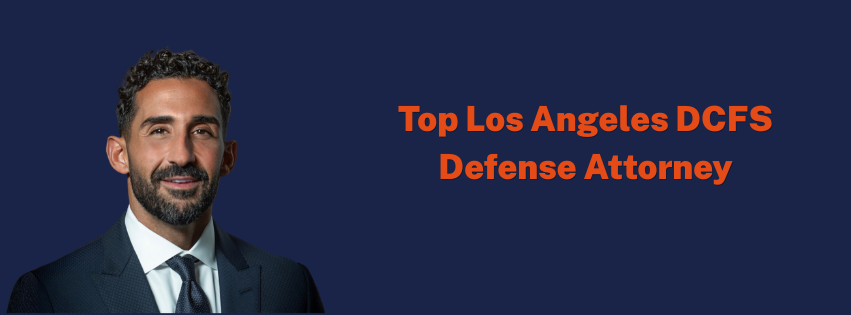
Lead attorney: Mohammad “Mo” Abuershaid
Founding partner and lead trial attorney, ALL Trial Lawyers / Abuershaid Law, APC. California State Bar #297270. Mo began his career at the Orange County Public Defender’s Office and has personally handled more than 2,000 juvenile dependency matters across Los Angeles, Orange, Riverside, San Bernardino, and San Diego counties. He is a Super Lawyers and Rising Stars honoree every year from 2020 through 2026, holds an Avvo 10.0 rating, and practices in English, Spanish, and Arabic.
For Malibu families, that means an attorney who appears regularly at Edelman, knows the West Los Angeles regional office and the Lost Hills Station, and has litigated the allegation patterns these cases actually produce: referrals timed to custody hearings in high-asset divorces, injuries first evaluated at a Westside emergency department, and allegations built on a parent’s mental health treatment or medication.
Nearest office to Malibu
ALL Trial Lawyers / Abuershaid Law, APC 10880 Wilshire Blvd, Suite 1101, Los Angeles, CA 90024 (via PCH and the 10, roughly 45 minutes) Also: 9465 Wilshire Blvd, Suite 300, Beverly Hills, CA 90212, and 8383 Wilshire Blvd, Suite 800, Beverly Hills, CA 90211 Phone: (866) 811-4255, 24/7 emergency line Hours: Weekdays 7:30 a.m. to 11:00 p.m., weekends 8:00 a.m. to 11:00 p.m. Consultations by phone or video any hour; in-person meetings at any office or, when a case requires it, at your home. Court: Edmund D. Edelman Children’s Court, 201 Centre Plaza Dr, Monterey Park, CA 91754
Frequently asked questions
Which DCFS office handles Malibu? Malibu referrals are typically assigned to the DCFS West Los Angeles Regional Office, which also covers Pacific Palisades, Brentwood, Santa Monica, and Culver City. Law enforcement involvement comes from the Los Angeles County Sheriff’s Malibu/Lost Hills Station. The assignment is confirmed at first contact.
Will a DCFS case become public? Dependency proceedings and records are confidential under Welfare and Institutions Code section 827, and Edelman hearings are closed to the public. The realistic exposure is through the custody case, through licensing boards if a finding is substantiated, and through a Child Abuse Central Index listing. Each of those is a defined risk we manage directly.
DCFS was called during my divorce. Can the family court still decide custody? Only until a section 300 petition is filed. After that, the juvenile court has exclusive jurisdiction over custody and visitation under section 304, and its exit orders under section 362.4 become the family court’s orders when the case closes. Closing the referral before a petition exists is the priority.
Do I have to let the social worker into my home or speak to my staff? You do not have to permit entry without a warrant, court order, or emergency, and you should not sit for an interview before speaking with counsel. The department may interview household employees and school personnel without your consent; your attorney should know who they are and what they will be asked.
Our child was seen at Saint John’s or UCLA and the hospital made a report. Does that mean DCFS thinks we hurt our child? No. Hospital staff are mandated reporters who must report any suspicion, including injuries that turn out to have an innocent or medical explanation. What matters is getting the medical evidence independently reviewed by the right sub-specialist before the department’s narrative hardens.
Where will my case be heard, and how soon? At Edmund D. Edelman Children’s Court in Monterey Park, well over an hour from Malibu at hearing time. If a child is removed, DCFS must file its petition within 48 hours, excluding weekends and court holidays, and the detention hearing is held by the end of the next judicial day after filing. We prepare the night before so you walk in with a plan.
Tell us what DCFS told you.
Whether a social worker just called, a safety plan is on the table, or your child has been removed, the first conversation is free and confidential. We will tell you in ten minutes whether you need representation.
Call (866) 811-4255. Free. Confidential. 24/7.
Attorney advertising. This page is general legal information about California juvenile dependency law and is not legal advice for any specific situation. Reading it does not create an attorney-client relationship; that relationship is formed only by a signed written engagement agreement. Past results do not guarantee future outcomes. Statutes cited are summarized and subject to change. Responsible attorney: Mohammad Abuershaid, Esq. (State Bar #297270), ALL Trial Lawyers / Abuershaid Law, APC, 10880 Wilshire Blvd, Suite 1101, Los Angeles, CA 90024. Phone (866) 811-4255.